
Whether you're training for your first 5K, competing at a provincial level, playing recreational hockey on weekends, or simply enjoying regular workouts at the gym, every athlete shares one common concern: injury. A single awkward landing, an unexpected twist, or months of repetitive strain can suddenly interrupt weeks, months, or even years of consistent training. Yet injuries rarely occur without warning. More often than not, they are the result of a combination of factors that gradually place the body under more stress than it can comfortably tolerate.
Many athletes make the mistake of viewing injuries as isolated events. They believe a pulled hamstring happened because they sprinted too hard, or a shoulder injury occurred because of one poor lift in the gym. While a specific moment may trigger the pain, the groundwork for that injury is often laid weeks or months beforehand. Small changes in movement, muscle imbalances, limited mobility, inadequate recovery, or accumulated fatigue can quietly increase stress on joints and tissues until the body finally reaches its breaking point.
Modern sports physiotherapy has shifted away from simply treating injuries after they happen. Today, the focus is equally on preventing injuries, improving athletic performance, and helping individuals return to sport stronger than they were before. At Apti Sports Physio & Beyond, every athlete is viewed as an entire movement system rather than just an injured body part. This philosophy allows treatment to address not only the current injury but also the underlying factors that contributed to it in the first place.
One of the most fascinating aspects of sports injuries is that they often follow predictable patterns. Runners commonly experience knee pain, shin splints, Achilles tendon problems, and plantar fasciitis. Hockey players frequently develop hip stiffness, groin strains, and shoulder injuries. Tennis players may struggle with elbow pain, while golfers often experience lower back discomfort due to repetitive rotational forces. Even athletes participating in strength training are not immune. Poor lifting mechanics, excessive training volume, or inadequate recovery can gradually lead to shoulder impingement, lower back pain, or muscle strains.
What many athletes fail to realize is that pain is often the final symptom rather than the first sign of a problem. Long before discomfort appears, the body may already be compensating. A stiff ankle may reduce normal movement during running, forcing the knee to absorb greater forces. Weak hip muscles may alter pelvic control, placing additional stress on the lower back. Limited shoulder mobility may encourage poor lifting mechanics, eventually leading to tendon irritation or rotator cuff injuries.
This interconnected nature of human movement is why effective rehabilitation requires far more than resting until pain disappears. Pain relief alone does not mean the injury has fully healed or that the body has regained its previous capacity to tolerate physical demands. Returning to sport too quickly often results in reinjury because the original movement dysfunction has never been corrected.
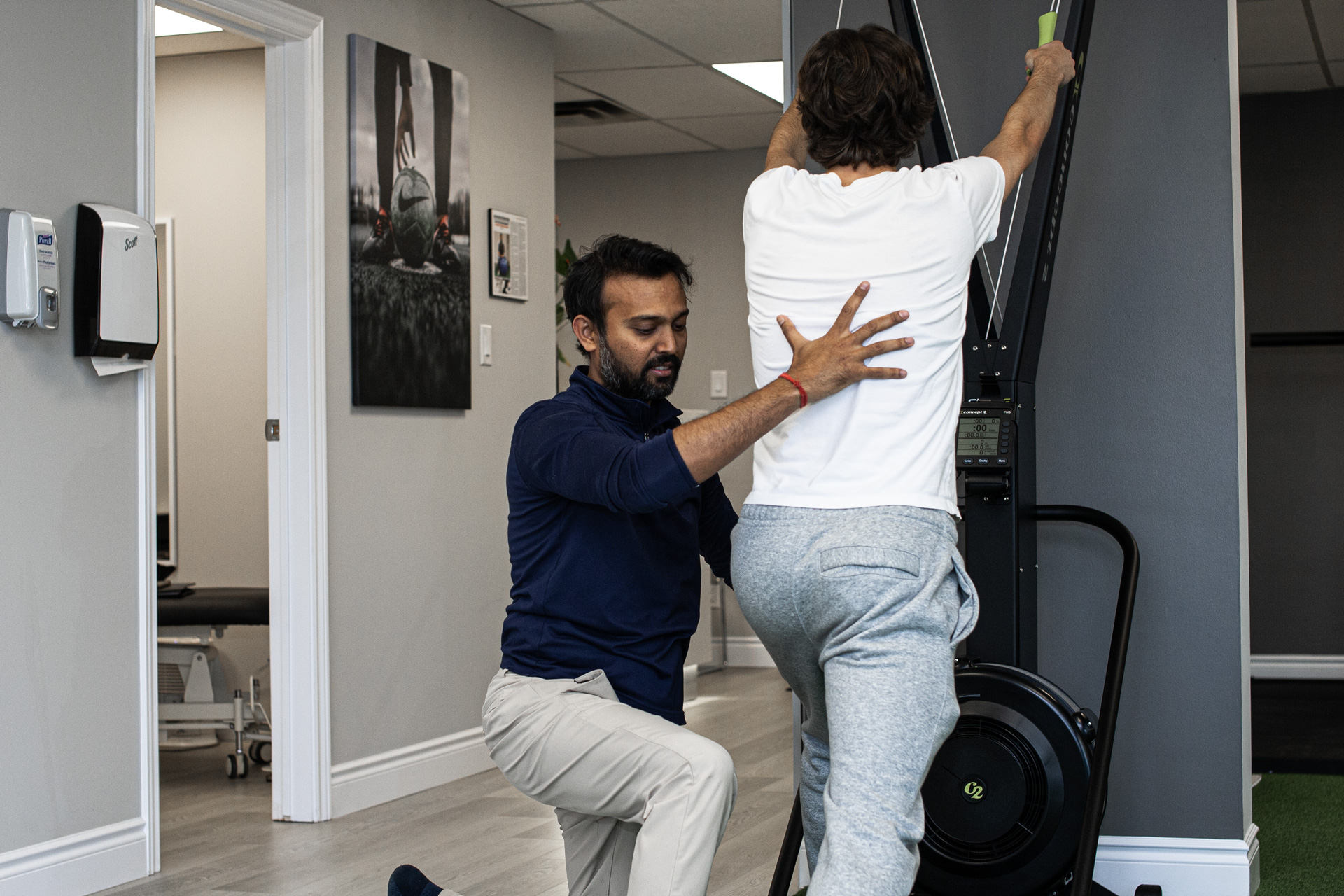
A comprehensive physiotherapy assessment provides valuable insight into these hidden contributors. Beyond evaluating the injured area, physiotherapists examine strength, mobility, balance, coordination, posture, biomechanics, and sport-specific movement patterns. This detailed assessment allows rehabilitation to be individualized rather than relying on generalized exercise programs found online.
Recovery itself is a carefully managed process. During the early stages, the goal is often to reduce pain, calm inflammation, and restore comfortable movement. As healing progresses, emphasis gradually shifts toward rebuilding strength, improving flexibility, restoring endurance, and retraining movement quality. Eventually, rehabilitation becomes increasingly sport-specific, preparing athletes for the physical demands they will encounter when competition resumes.
Strength training plays a particularly important role in injury prevention. Contrary to common misconceptions, stronger muscles help distribute forces more effectively across joints, reducing excessive stress on tendons and ligaments. Equally important is mobility. Adequate flexibility allows joints to move efficiently through their intended range without placing unnecessary strain on surrounding tissues. Neither strength nor flexibility alone is sufficient; optimal performance depends on a balance of both.
Recovery extends well beyond what happens inside the clinic. Sleep, nutrition, hydration, stress management, and training load all influence how quickly tissues heal and adapt. Even the best rehabilitation program cannot compensate for chronic sleep deprivation or consistently inadequate recovery between training sessions. Elite athletes understand that recovery is not time lost from training—it is an essential part of becoming stronger.
One area often overlooked is the psychological impact of injury. Athletes frequently experience frustration, anxiety, or reduced confidence during rehabilitation. Fear of reinjury may persist even after physical healing has occurred. Progressive rehabilitation helps rebuild not only physical capacity but also confidence in movement, allowing athletes to return to competition with greater assurance.
Preventing future injuries requires a proactive rather than reactive mindset. Regular movement screening, strength assessments, flexibility evaluations, and biomechanical analysis can identify potential risk factors before symptoms develop. Addressing minor issues early is almost always easier than rehabilitating a significant injury later.
Sports physiotherapy is not reserved exclusively for elite competitors. Recreational athletes often benefit just as much, if not more. Weekend warriors frequently balance demanding careers, family responsibilities, and inconsistent training schedules, making proper injury management especially important. A minor injury that might sideline a professional athlete for two weeks could affect a recreational athlete for months if ignored.
Every athlete has goals that extend beyond simply avoiding pain. Whether that goal is completing a marathon, improving golf performance, returning to hockey after surgery, increasing strength in the gym, or simply enjoying recreational sport without limitations, movement quality forms the foundation of success.
At Apti Sports Physio & Beyond, we believe every athlete deserves evidence-based care that focuses on long-term performance rather than short-term symptom relief. By understanding how the body moves, identifying the true source of dysfunction, and developing individualized rehabilitation strategies, we help athletes throughout Bolton, Caledon, Brampton, Vaughan, Nobleton, Kleinburg, and surrounding communities return to doing what they love with greater confidence, resilience, and performance than ever before.