


In this article
What a screen actually involves
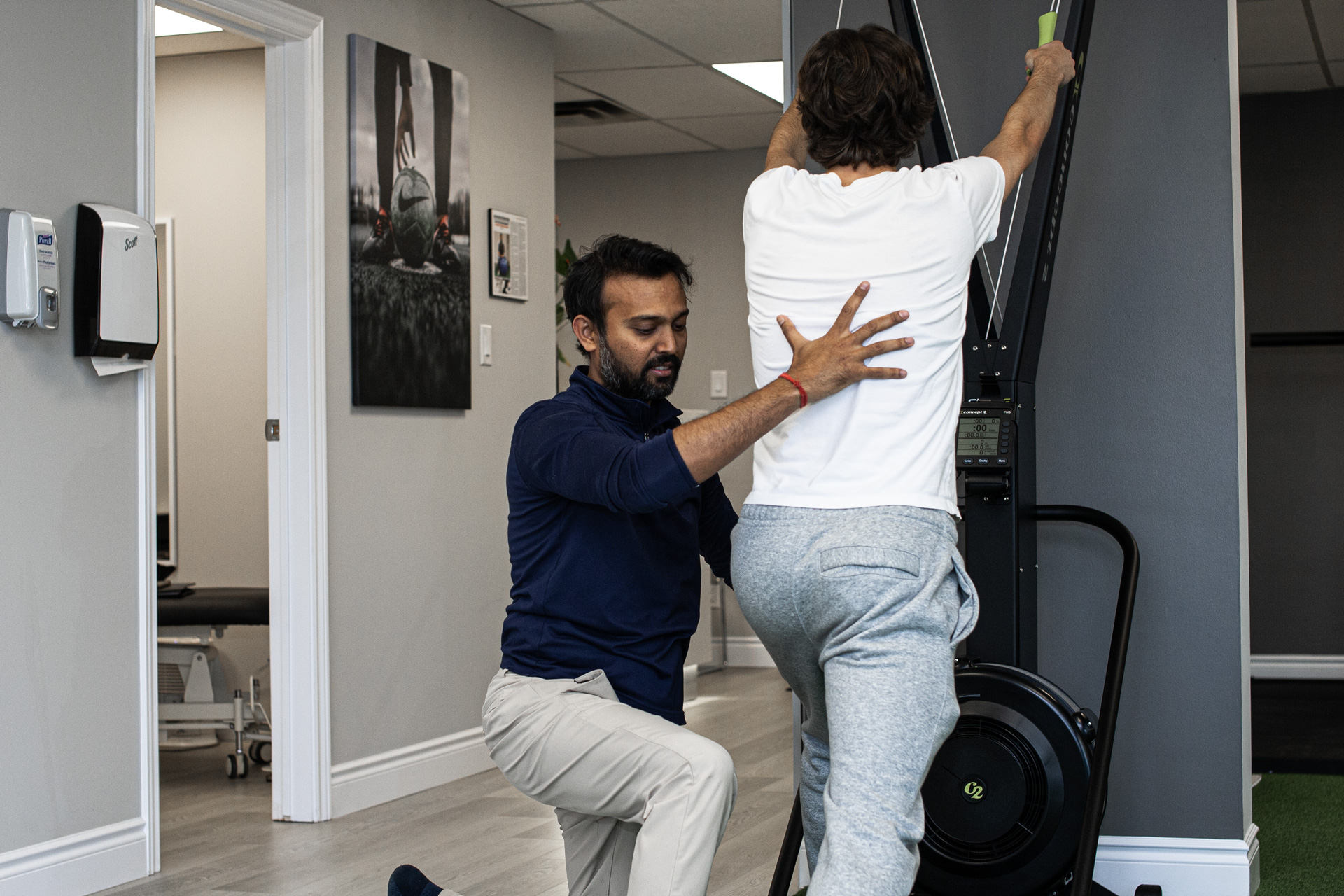
A musculoskeletal screening at Apti is a detailed physiotherapy assessment and pre-participation examination. It focuses on finding the possible sources of injury and building a prehab programme around what it finds. In practice that means:
- Injury history — the single strongest predictor of future injury
- Joint range of motion and movement screening
- Strength testing, including isometric force plate assessment
- Biomechanical evaluation with EMG biofeedback where relevant
- Video analysis of sport-specific movement
- Workload review — training volume, competition schedule, life demands
The numbers that matter
Force plate testing produces more data than anyone needs. The metrics that consistently earn their place:
- Peak force and rate of force development. How much and how fast — the second matters more in sport than the first.
- Limb symmetry index. Left versus right, expressed as a percentage.
- Eccentric hamstring strength. Particularly relevant to sprinting sports; NordBord testing is the standard.
- Landing and deceleration mechanics. Where most non-contact injuries actually happen.
- Adductor and abductor squeeze strength. A workhorse metric for groin injury risk in soccer and hockey.
Asymmetry is not automatically bad
A commonly repeated rule is that more than 10–15% asymmetry is a problem. That is a useful rough guide and a poor absolute rule. Some sports produce genuine, functional asymmetry — a fast bowler, a golfer, a fencer, a placekicker. The meaningful question is whether the asymmetry has changed from that athlete’s own baseline, which is precisely why the baseline exists.
Without a pre-season number, a mid-season number is a data point with nothing to compare it to.
What it can and cannot predict
Be sceptical of anyone selling screening as injury prediction. No test battery reliably predicts who will get hurt — injury is multifactorial and includes contact, fatigue, surface, schedule and luck. What screening genuinely delivers is different and more useful:
- A baseline for return-to-play decisions after any future injury
- Identification of modifiable deficits worth training now
- A prehab programme aimed at something specific rather than generic
- Objective evidence of whether that programme is working
Screening a whole squad
Screening a full team in a single session is efficient and, in our experience, does something a spreadsheet cannot: it builds buy-in. Athletes who see their own numbers train differently to athletes who are handed a generic prehab sheet. Teams that train together, win together — and we offer a group discount on MSK screening for exactly this reason.
Medical disclaimer. This article is general information written by the team at Apti Physiotherapy & Beyond and is not a substitute for individual assessment, diagnosis or treatment. Injuries that look identical on paper often have very different drivers. If you are in pain, book an assessment with a registered physiotherapist — ours or anyone else’s.