


Shoulder pain has an unusual way of creeping into everyday life. It may begin as a mild ache after a workout, a dull discomfort while reaching for something on a high shelf, or stiffness that only appears first thing in the morning. At first, it seems insignificant—something that will disappear with a few days of rest. But weeks pass, then months, and suddenly simple activities like putting on a jacket, fastening a seatbelt, carrying groceries, or sleeping on one side become surprisingly difficult.
If this sounds familiar, you're far from alone. Shoulder pain is one of the most common musculoskeletal conditions affecting adults of all ages. Whether you're a recreational athlete, a construction worker, an office professional, a parent lifting young children, or someone simply trying to stay active, the shoulder is one of the hardest-working joints in the body. Because it is designed for exceptional mobility, it is also more vulnerable to injury than many people realize.
At Apti Sports Physio & Beyond, we regularly see patients from Bolton, Caledon, Nobleton, Kleinburg, Brampton, Vaughan, and surrounding communities who have spent months trying to manage shoulder pain on their own. Many arrive believing they have permanently damaged their shoulder or that surgery is their only option. In reality, most shoulder conditions respond extremely well to evidence-based physiotherapy when the underlying cause is properly identified and treated.
One of the biggest misconceptions about shoulder pain is that the location of the pain tells you exactly what's wrong. The shoulder is an incredibly complex structure made up of several joints, muscles, tendons, ligaments, nerves, and connective tissues working together. Pain felt at the front of the shoulder may actually originate from the rotator cuff. Pain on the outside of the shoulder may be caused by irritation beneath the acromion. Sometimes discomfort begins in the neck and radiates into the shoulder, while poor posture or weakness in the upper back can quietly overload the shoulder joint over months or even years.
This complexity is why accurate diagnosis matters. Treating every shoulder injury the same way rarely produces lasting results. Instead, successful recovery begins with understanding how your shoulder moves, how the surrounding muscles function, and what factors are preventing the joint from working efficiently.
Unlike the hip, which is built for stability, the shoulder sacrifices stability in exchange for an enormous range of motion. This allows us to throw a ball, swing a tennis racket, lift weights overhead, reach behind our backs, and perform thousands of movements every day. However, this freedom of movement also means the shoulder relies heavily on muscles rather than bone for stability. When those muscles become weak, fatigued, or uncoordinated, other tissues begin absorbing forces they were never designed to handle.
The rotator cuff is perhaps the best-known group of shoulder muscles, yet many people misunderstand its role. These four small muscles don't simply lift the arm—they constantly stabilize the shoulder joint, keeping the upper arm centred within the socket during movement. When these muscles become irritated or weakened, larger muscles attempt to compensate, often leading to inefficient movement patterns and increasing pain over time.
Another common contributor is shoulder impingement, a condition in which tendons or soft tissues become compressed during arm movements. Contrary to older beliefs, modern research suggests that impingement is rarely caused by a single anatomical problem. Instead, it often develops because of poor movement mechanics, muscular imbalance, reduced thoracic spine mobility, or repetitive overhead activity. Understanding these contributing factors is essential because simply resting the shoulder rarely resolves the underlying issue.
Frozen shoulder, or adhesive capsulitis, presents a different challenge. It often develops gradually without a significant injury, leading to increasing stiffness and severe restrictions in movement. Activities such as combing hair, fastening a bra, or reaching into the back seat of a car become progressively more difficult. Although frozen shoulder typically improves over time, physiotherapy can help maintain mobility, reduce discomfort, and support recovery throughout the different stages of the condition.
Athletes face their own unique risks. Swimmers perform thousands of overhead movements each week. Tennis players generate powerful rotational forces. Baseball and cricket players repeatedly accelerate and decelerate the shoulder during throwing. Weightlifters place heavy loads through the joint during pressing exercises. Even recreational gym-goers may unknowingly develop shoulder pain by performing exercises with poor technique or inadequate mobility.
Office workers often assume they are less likely to develop shoulder problems because they don't participate in physically demanding jobs. Ironically, prolonged desk work is one of the most common contributors to persistent shoulder discomfort. Hours spent sitting with rounded shoulders and a forward head posture reduce normal movement of the upper back while placing constant tension on muscles surrounding the neck and shoulders. Over time, these subtle changes can alter how the shoulder functions during everyday activities.
Pain itself is only one part of the story. Many people become fearful of moving their shoulder once it begins hurting. While this reaction is understandable, avoiding movement altogether often creates additional problems. Muscles weaken, joints become stiffer, and confidence in movement gradually disappears. Modern physiotherapy focuses on restoring comfortable movement rather than encouraging prolonged rest. The right exercises, introduced at the appropriate stage of recovery, help tissues heal while rebuilding strength and coordination.
A comprehensive physiotherapy assessment goes far beyond asking where it hurts. At Apti Sports Physio & Beyond, we examine posture, shoulder mobility, strength, scapular control, neck function, upper back movement, and the specific demands of your work, hobbies, or sport. We want to understand not only what is causing your pain today but also why it developed in the first place.
This broader perspective often reveals surprising findings. Someone experiencing shoulder pain may actually have limited mobility through the thoracic spine. Another patient may demonstrate weakness in muscles controlling the shoulder blade rather than the shoulder itself. A runner with recurring shoulder tension may have inefficient arm mechanics, while a golfer's pain may stem from restrictions affecting rotational movement through the trunk.
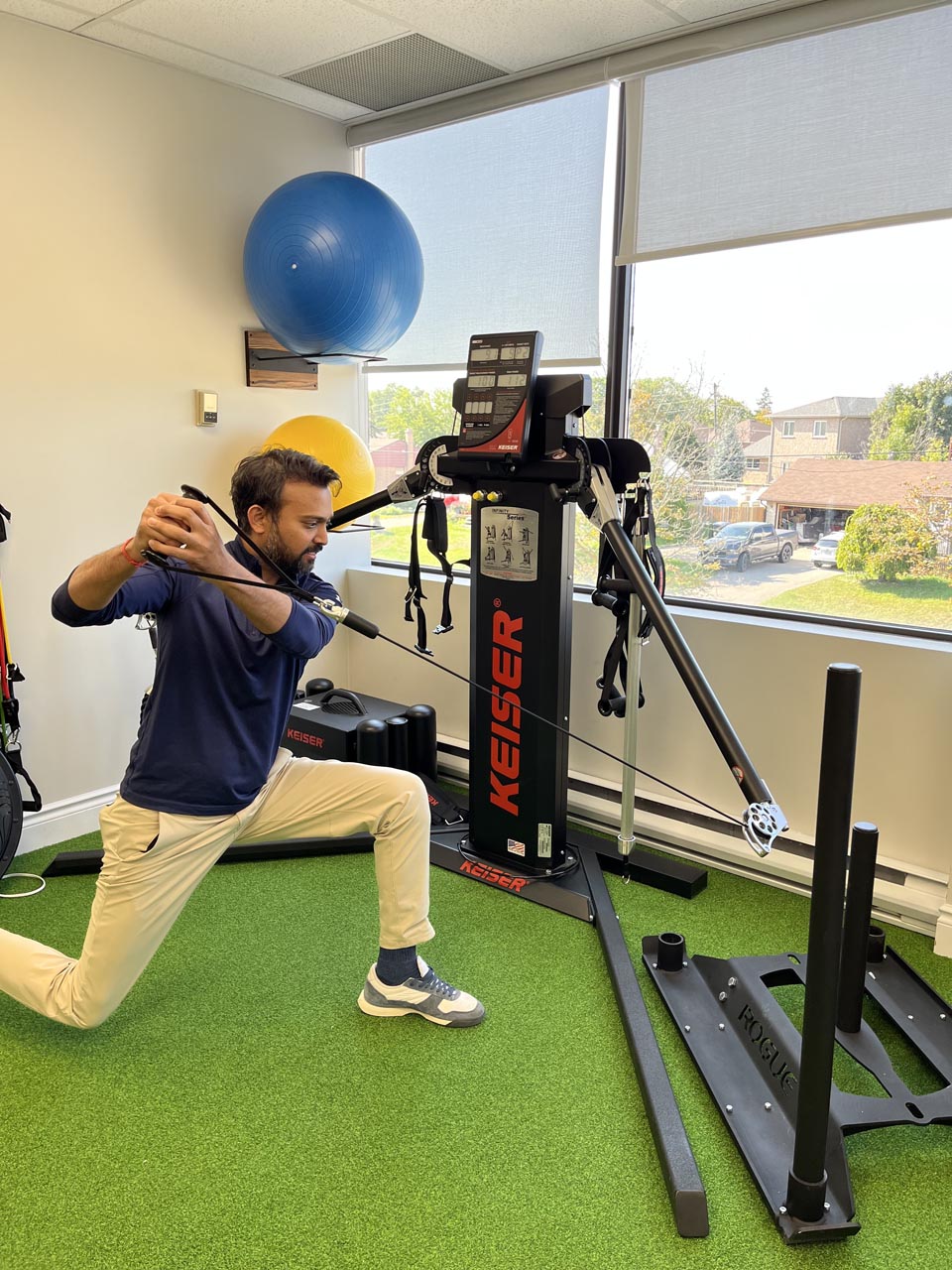
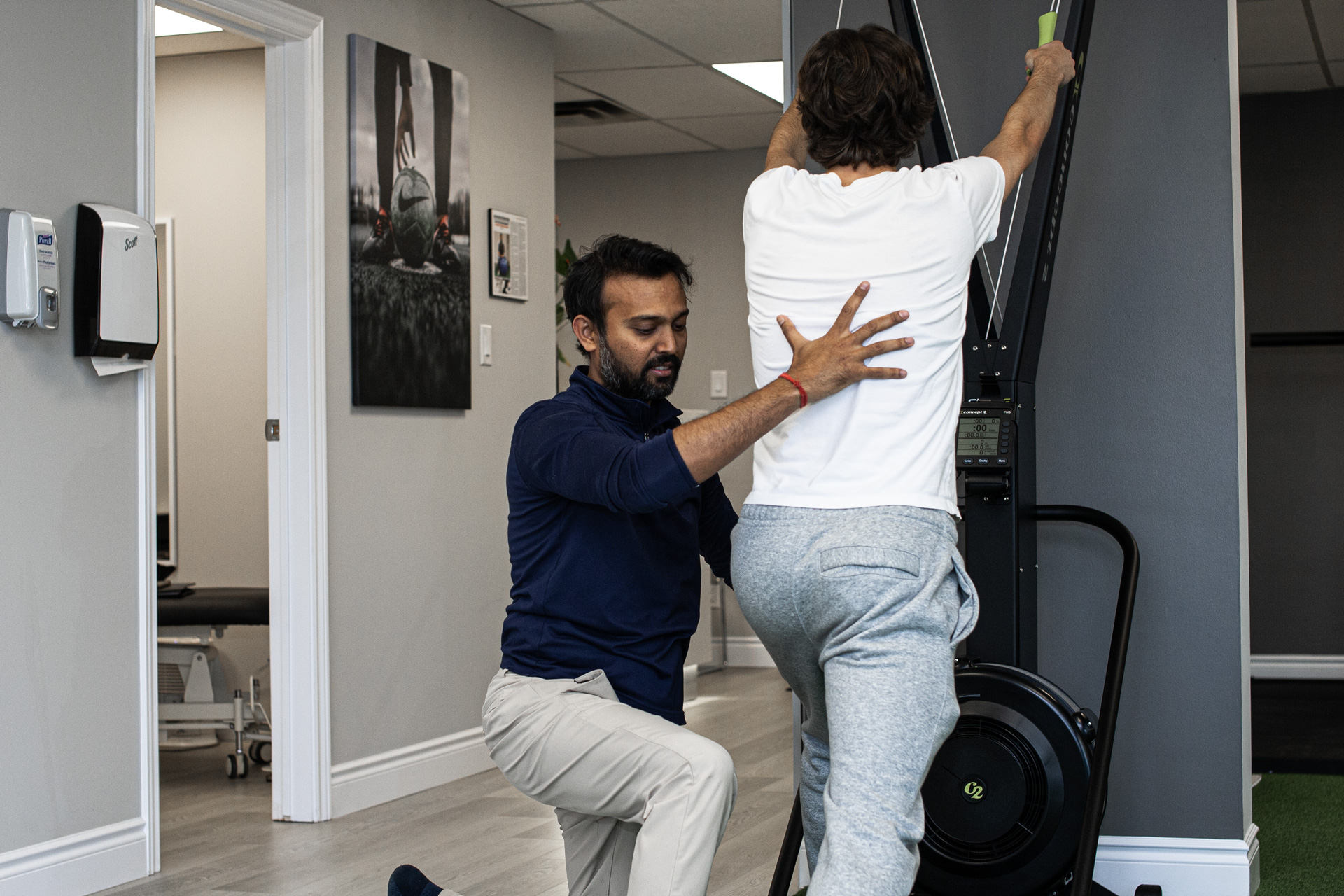
Treatment is therefore tailored to each individual rather than based solely on a diagnosis. Hands-on manual therapy may be used to improve joint mobility, reduce muscle tension, and restore comfortable movement. Therapeutic exercises progressively rebuild strength and endurance, while movement retraining teaches the body to distribute forces more efficiently during everyday activities and sports.
Education is another essential component of recovery. Understanding why symptoms developed empowers patients to make meaningful changes. Small adjustments to workstation ergonomics, sleeping positions, lifting technique, exercise programming, or training volume often have a significant impact on long-term shoulder health.
One of the questions we hear most often is whether surgery can be avoided. While some shoulder injuries genuinely require surgical intervention, many do not. Research has consistently shown that structured physiotherapy can provide excellent outcomes for numerous shoulder conditions, including many rotator cuff problems, impingement syndromes, tendinopathies, and movement-related dysfunctions. In many cases, improving strength, restoring mobility, and correcting biomechanics allows individuals to return to normal activities without invasive procedures.
Recovery is rarely about finding a quick fix. Meaningful rehabilitation requires patience, consistency, and a willingness to gradually challenge the shoulder as healing progresses. Some patients notice improvement within a few weeks, while others recovering from more complex injuries require several months. The timeline varies, but the goal remains the same: restoring function rather than simply masking symptoms.
Prevention deserves equal attention. Maintaining shoulder strength, improving posture, warming up before activity, gradually increasing training loads, and addressing minor discomfort before it becomes a major injury all contribute to healthier shoulders over the long term. Athletes benefit from regular movement screening, while office workers should prioritize regular movement breaks and workstation adjustments.
Shoulder pain can feel frustrating because it affects so many aspects of daily life, but it should never be accepted as a normal part of getting older or staying active. The vast majority of people can significantly improve with the right combination of assessment, education, hands-on treatment, and progressive exercise.
At Apti Sports Physio & Beyond, our philosophy is simple: treat the person, not just the painful shoulder. By understanding how the entire body moves and addressing the true source of dysfunction, we help patients throughout Bolton, Caledon, Brampton, Nobleton, Kleinburg, Vaughan, and nearby communities recover from shoulder pain, improve performance, and return to the activities they love with confidence.
Your shoulder was designed to move freely and powerfully. With evidence-based physiotherapy and an individualized rehabilitation plan, there's every reason to believe it can do so again.