

In this article
- Lower Back Pain Is Rarely Just About the Back
- Why Does Lower Back Pain Develop?
- Understanding the Different Types of Lower Back Pain
- The Role of Modern Physiotherapy
- Why Rest Isn't Always the Best Medicine
- The Importance of Movement Quality
- Preventing Future Episodes
- When Should You Seek Professional Help?
- Looking Beyond Pain Toward Long-Term Health
Few health problems are as common—or as misunderstood—as lower back pain. Almost everyone experiences it at some point in life. For some, it begins after lifting a heavy object or playing a weekend game of soccer. For others, it develops gradually after months or years of sitting at a desk, commuting long hours, or simply becoming less active over time. Regardless of how it starts, lower back pain has an extraordinary ability to interfere with everyday life. Simple tasks like tying your shoes, picking up your child, getting out of bed, or even sitting through a meeting can suddenly become uncomfortable.
Yet despite how widespread it is, many people still believe that back pain is something they simply have to live with. Others assume that an MRI will reveal the problem immediately, that surgery is inevitable, or that complete bed rest is the best solution. In reality, modern research has transformed our understanding of back pain. Today, physiotherapists know that successful treatment rarely begins with simply focusing on the painful area. Instead, it starts with understanding how the entire body moves, how different joints and muscles work together, and why pain develops in the first place.
At Apti Sports Physio & Beyond, we believe that every individual deserves more than temporary relief. Our goal is to identify the root cause of your discomfort, restore healthy movement, and help you return to the activities you enjoy with greater confidence and resilience. Whether you're a competitive athlete, an office professional, a busy parent, or someone who simply wants to walk comfortably again, understanding your back pain is the first step toward lasting recovery.
Lower Back Pain Is Rarely Just About the Back
One of the biggest misconceptions surrounding lower back pain is the belief that the painful area must also be the source of the problem. The human body doesn't work that way. Every joint, muscle, tendon, and ligament is part of an interconnected system designed to distribute forces efficiently. When one part of the body stops functioning as it should, another often compensates.
Imagine driving a car with one wheel slightly out of alignment. At first, you may not notice anything unusual. Over time, however, the tires wear unevenly, the suspension works harder, and components that were never designed to handle extra stress begin to fail. The body behaves in much the same way.
Limited hip mobility, weak core muscles, stiff ankles, reduced thoracic spine movement, previous knee injuries, poor lifting mechanics, and prolonged sitting can all increase the workload placed on the lower back. Months—or even years—of compensation may eventually lead to muscle strain, joint irritation, disc-related pain, or persistent stiffness.
This is why treating symptoms alone often provides only temporary relief. Pain medication may reduce discomfort for a few hours. Massage may ease muscle tightness for several days. But unless the underlying movement dysfunction is identified and corrected, the cycle frequently repeats itself.
Why Does Lower Back Pain Develop?
Lower back pain rarely has a single cause. Instead, it usually results from a combination of lifestyle habits, physical demands, previous injuries, and natural age-related changes.
Modern life has introduced new challenges that our bodies were never designed to handle. Many people spend eight to ten hours each day sitting at a computer, driving, or looking down at mobile devices. While sitting itself isn't inherently harmful, remaining in one position for prolonged periods reduces circulation, decreases joint mobility, and places continuous stress on spinal tissues.
Physical inactivity can also weaken the muscles responsible for supporting the spine. Contrary to popular belief, the core isn't just about visible abdominal muscles. It includes a complex network of deep stabilizing muscles surrounding the spine, pelvis, diaphragm, and hips. When these muscles become less effective, the lower back often compensates by working harder during even simple daily activities.
Athletes face different challenges. High-intensity training, repetitive movements, sudden changes in direction, and insufficient recovery can gradually overload spinal structures. Runners may develop back pain because of restricted hip mobility. Golfers often experience discomfort due to repetitive rotational forces. Hockey, soccer, tennis, cricket, and weightlifting each place unique demands on the spine that require careful movement control and conditioning.
Stress can also influence back pain more than many people realize. Emotional stress doesn't directly damage the spine, but it can increase muscle tension, alter breathing patterns, reduce sleep quality, and heighten the nervous system's sensitivity to pain. This helps explain why symptoms often worsen during particularly demanding periods at work or home.
Understanding the Different Types of Lower Back Pain
Not all lower back pain feels the same because not all back pain has the same cause.
Some individuals experience a dull, persistent ache that gradually worsens throughout the day. Others describe a sudden sharp pain after lifting something heavy. Some notice stiffness every morning that improves as they begin moving, while others feel pain primarily after prolonged sitting.
Muscular pain often feels localized and may improve with gentle movement. Joint-related pain may become worse after certain positions or activities. Disc-related symptoms sometimes produce pain that travels into the buttock or leg, although not every disc injury causes sciatica. Nerve irritation can lead to numbness, tingling, burning sensations, or weakness extending below the knee.
Because different conditions often produce similar symptoms, self-diagnosis can be misleading. This is one reason why a comprehensive physiotherapy assessment is so valuable. Rather than assuming the source of pain, a physiotherapist evaluates movement patterns, strength, flexibility, posture, neurological function, and overall biomechanics to develop an individualized treatment plan.
The Role of Modern Physiotherapy
Physiotherapy has evolved significantly over the past two decades. Today's evidence-based approach focuses on improving movement quality, restoring function, reducing pain, and preventing future injuries—not simply treating symptoms.
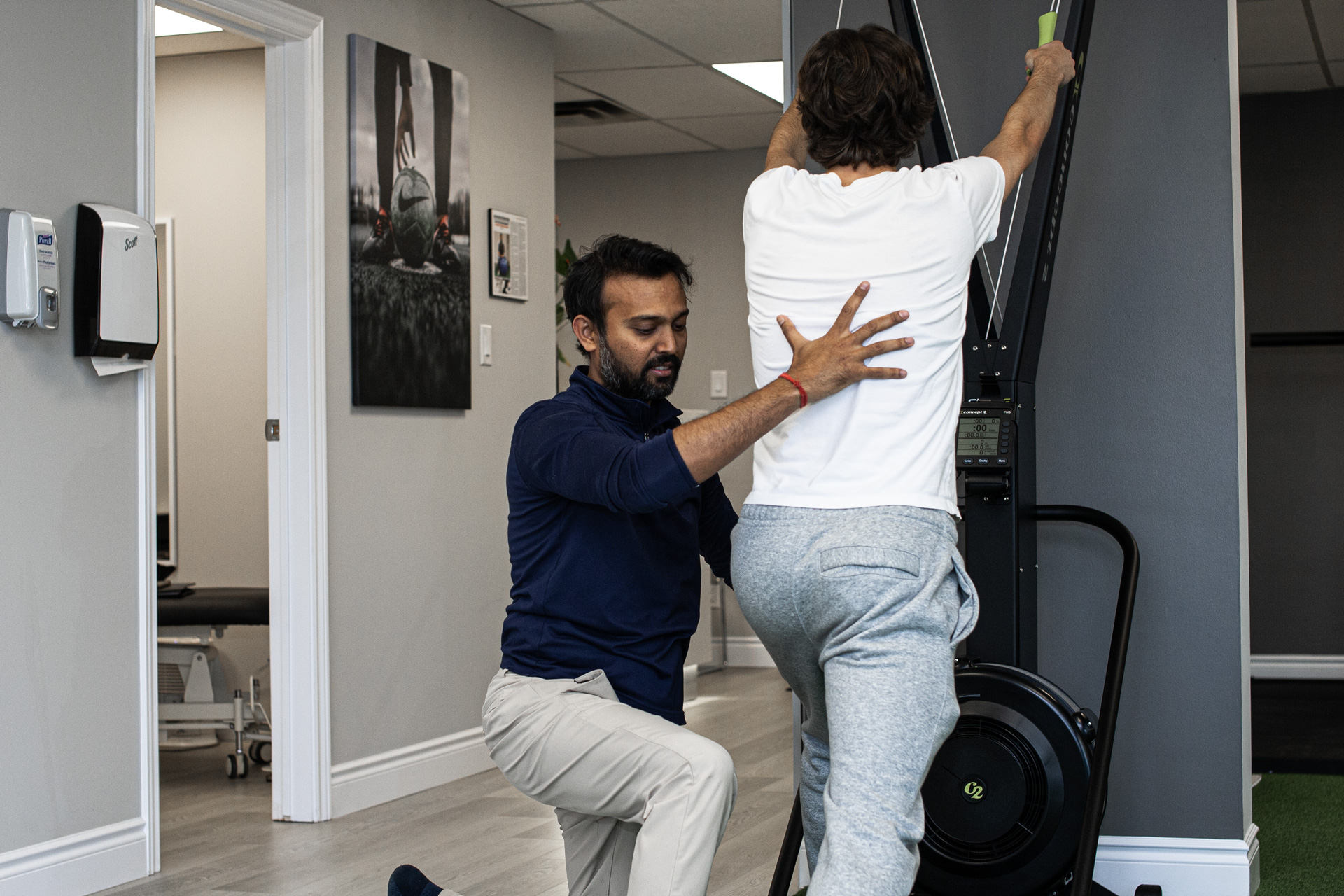
A thorough assessment is the cornerstone of effective care. At Apti Sports Physio & Beyond, we look beyond the painful area to understand how your entire body moves. We assess joint mobility, muscle strength, flexibility, balance, posture, walking mechanics, functional movements, previous injuries, and the physical demands of your work, hobbies, or sport.
This comprehensive understanding allows treatment to be tailored specifically to your needs rather than following a one-size-fits-all protocol.
Manual therapy often plays an important role during the early stages of recovery. Hands-on techniques may help improve joint mobility, reduce muscle tension, and restore normal movement. However, manual therapy alone is rarely enough. Long-term success depends on combining hands-on treatment with progressive exercise, movement education, and strategies that empower patients to manage their own recovery.
Exercise remains one of the most effective treatments for persistent lower back pain. Carefully selected exercises improve strength, flexibility, endurance, coordination, and confidence in movement. Rather than avoiding activity altogether, most people benefit from gradually returning to normal movement under professional guidance.
Why Rest Isn't Always the Best Medicine
Years ago, prolonged bed rest was commonly recommended for back pain. We now know that extended inactivity often delays recovery.
While severe pain may require temporary activity modification, remaining completely inactive can lead to muscle weakness, joint stiffness, reduced circulation, and increased fear of movement. Research consistently shows that maintaining appropriate levels of activity—within comfortable limits—generally leads to better outcomes than prolonged rest.
This doesn't mean pushing through severe pain or returning to heavy lifting immediately. Instead, it means finding the right balance between protecting injured tissues and encouraging healthy movement as healing progresses.
The Importance of Movement Quality
Many people focus on how much they exercise without considering how they move. Quality of movement often matters just as much as quantity.
Simple tasks like bending to pick something up, carrying groceries, climbing stairs, or reaching overhead involve coordinated movement throughout the body. If one area lacks mobility or strength, another often compensates.
Learning efficient movement patterns can significantly reduce stress on the spine while improving overall function. Small adjustments in lifting technique, workstation setup, athletic performance, or daily habits frequently produce meaningful improvements over time.
Preventing Future Episodes
One of the strongest predictors of future back pain is having experienced back pain before. Fortunately, recurrence isn't inevitable.
Successful prevention focuses on building resilience rather than avoiding activity altogether.
Regular physical activity keeps joints mobile and muscles strong. Strength training improves spinal support. Flexibility exercises maintain healthy movement. Cardiovascular fitness enhances circulation and tissue health. Adequate sleep supports recovery, while good nutrition provides the building blocks necessary for healing.
Equally important is understanding how to recognize early warning signs. Mild stiffness after increased activity isn't necessarily harmful, but persistent discomfort, recurring pain, or increasing limitations deserve professional evaluation before they become more serious.
When Should You Seek Professional Help?
Many episodes of mild lower back pain improve within a few days. However, professional assessment is recommended if pain persists beyond a week or two, repeatedly returns, interferes with work or daily activities, or limits your ability to exercise and enjoy life.
Immediate medical attention is important if back pain follows significant trauma or is accompanied by severe leg weakness, loss of bladder or bowel control, numbness in the groin area, fever, unexplained weight loss, or other concerning symptoms. Although these situations are uncommon, they require prompt evaluation.
For the vast majority of people, however, lower back pain responds well to conservative treatment when addressed early and appropriately.
Looking Beyond Pain Toward Long-Term Health
Lower back pain doesn't have to define your lifestyle. Modern physiotherapy is about far more than helping pain settle down. It's about understanding why that pain developed, restoring confidence in movement, improving physical resilience, and helping you continue doing the things that matter most—whether that's playing sports, keeping up with your children, working comfortably, or simply enjoying everyday life without constantly thinking about your back.
Every person's story is different, and every recovery journey deserves an individualized approach. By identifying the root cause of movement dysfunction rather than simply treating symptoms, physiotherapy offers a pathway toward lasting improvement rather than short-term relief.
At Apti Sports Physio & Beyond, our commitment is to evidence-based, patient-centered care that focuses on restoring movement, optimizing performance, and helping people throughout Bolton, Caledon, Nobleton, Kleinburg, Brampton, Vaughan, and the surrounding communities live healthier, more active lives.
If lower back pain has been holding you back, remember that the right assessment, the right treatment plan, and the right guidance can make all the difference. Recovery isn't simply about getting rid of pain—it's about helping you move with confidence again.